- 248
Office Interior Design Beijing | Fitout, Building & Construction for Experiential Workplaces
Beijing’s corporate landscape is evolving rapidly. Anchored by high-density business districts such as Chaoyang, CBD, and Wangjing, the city hosts a dynamic mix of government institutions, multinational headquarters, technology firms, and innovative start-ups. Companies are rethinking what the modern workplace should be, balancing traditional efficiency with flexible, human-centric environments.Office Interior Design Beijing
For businesses striving to attract top talent and enhance organizational performance, Office Interior Design Beijing is no longer just about aesthetics—it is about crafting experiential workplaces that foster connection, creativity, and well-being. At our firm, we design spaces that are both operationally efficient and emotionally engaging—空间有温度 (spaces with warmth).
Understanding Beijing’s Workplace Dynamics
Beijing offices are shaped by several unique factors:
- High-Density Office Ecosystems: With skyscrapers dominating the skyline, careful spatial planning is essential
- Evolving Work Patterns: Hybrid work, flexible schedules, and co-working trends are increasingly influencing office design
- Advanced Technology Integration: Smart building systems, digital collaboration tools, and IoT-enabled environments are becoming standard
- Cultural Expectations: Professionalism, hierarchy, and efficiency coexist with a growing desire for spaces that inspire creativity
These elements define the context for creating meaningful office environments—spaces that support human interaction while respecting operational needs.
Beyond Traditional Layouts: Integrating Fitout, Construction & Design Strategy
Modern office design in Beijing is most effective when design, fitout, and construction are seamlessly integrated.
Our firm approaches each workplace as a complete ecosystem:
- Workplace Strategy & Concept Development – Understanding business goals and user needs
- Technical Planning & Spatial Design – Translating concepts into efficient, flexible layouts
- Fitout & Construction Coordination – Ensuring design intent is fully realized
- Final Delivery & Styling – Curating spaces that are functional, beautiful, and inspiring
This holistic approach ensures that every decision—from materials to circulation—is purposeful and contributes to a cohesive workplace experience.
Creating Experiential Workplaces
The goal of experiential workplaces is to enhance human connection and performance. We ask: Does this office support meaningful interaction, creativity, and collaboration?
Activity-Based Working (ABW)
Flexible zones allow employees to choose the most suitable environment for their tasks:
- Focus areas for deep work
- Collaborative hubs for team projects
- Social zones for informal conversations
- Quiet corners for reflection
By providing variety, we empower employees to work in ways that suit them best, improving engagement and productivity.
Social & Interaction Spaces
In Beijing, building relationships is crucial. Thoughtfully designed communal hubs encourage spontaneous interaction—轻松又有意义的交流 (casual yet meaningful conversations)—and strengthen team cohesion.
Private & Focused Spaces
Equally important are areas for privacy and concentration. Acoustic design, spatial separation, and visual zoning ensure a balance between openness and focus.
Designing the Office Journey
Every office is experienced as a journey. Effective Office Interior Design Beijing considers each stage:
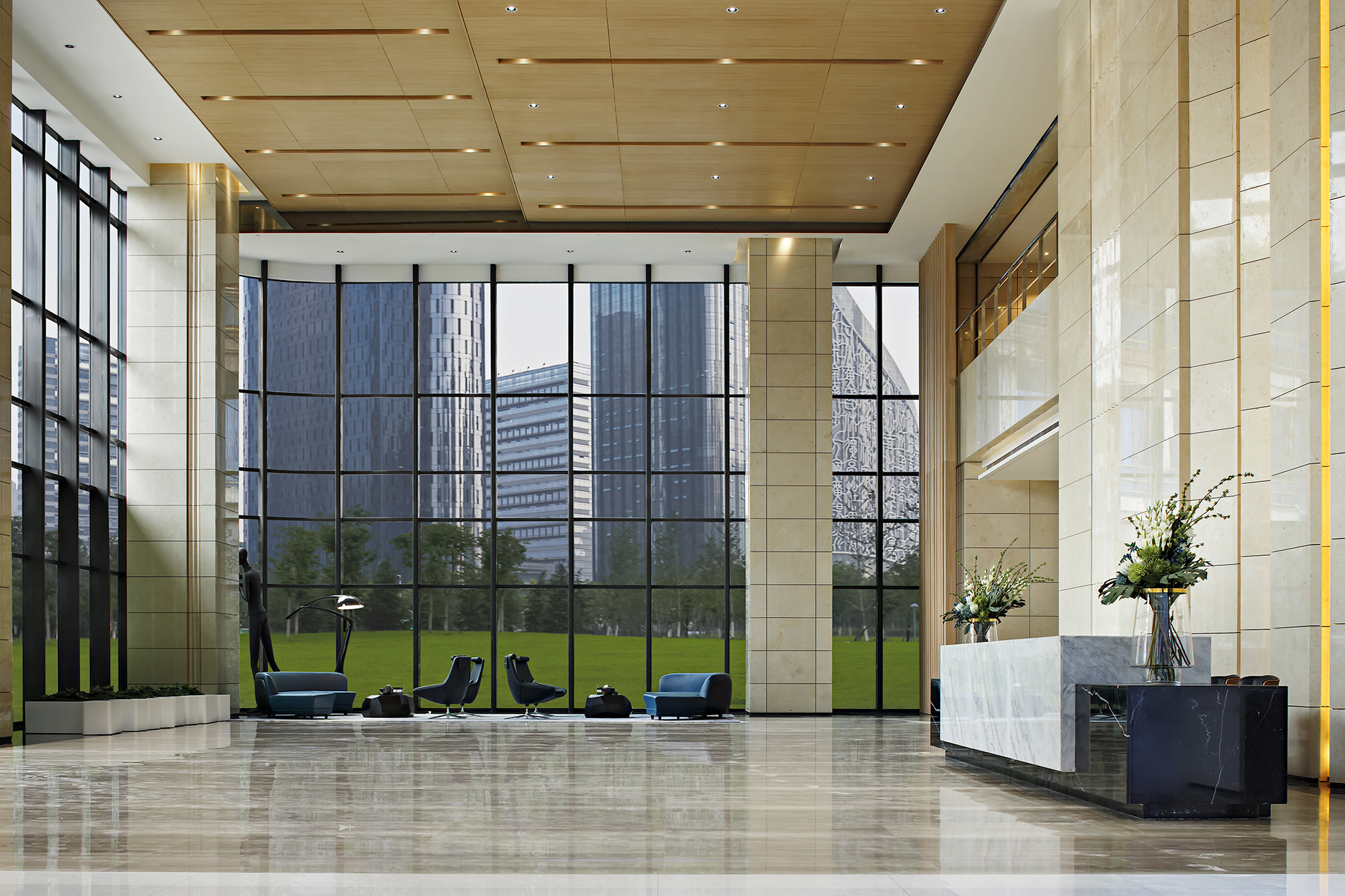
- Reception & Arrival Experience – First impressions set the tone for the organization
- Open Workspaces & Collaboration Zones – Balancing openness with functionality
- Meeting Rooms & Boardrooms – Supporting structured and informal meetings
- Breakout & Wellness Areas – Creating spaces for rest, reflection, and casual connection
Each space is designed with intention, promoting comfort, clarity, and engagement.
Key Design Considerations
Creating a high-performing office requires attention to both human experience and technical precision:
- Spatial Efficiency & Circulation: Optimized layouts ensure ease of movement and operational efficiency
- Ergonomics & Comfort: Furniture supports health and long-term use
- Lighting Strategy: Natural and artificial light layers enhance mood, productivity, and aesthetic quality
- Acoustic Comfort: Sound control ensures concentration in open-plan areas
- Material Durability: Finishes must withstand heavy use while remaining visually appealing
- Technology Integration: Smart systems enable flexible, future-ready workplaces
These considerations ensure the office is not only beautiful but functional and resilient.
Multi-Layered Design: Depth and Engagement
Experiential workplaces feel dynamic because of layered design strategies:
- Spatial zoning for diverse activity types
- Material contrast and texture for visual richness
- Layered lighting to define hierarchy and mood
- Visual connectivity for openness and interaction
This approach transforms the office from a static environment into an immersive, engaging space that supports both collaboration and individual focus.
Wellness, Sustainability & Biophilic Design
Incorporating wellness and sustainability is essential for modern workplaces:
- Biophilic Elements: Natural light, plants, and greenery improve focus and reduce stress
- Climate-Responsive Solutions: Ventilation, shading, and energy-efficient systems ensure comfort in Beijing’s seasonal climate
- Sustainable Materials: Long-lasting, low-impact materials support environmental responsibility and operational efficiency
Wellness-driven offices not only enhance employee health but also contribute to higher productivity and retention—舒适与高效兼得 (comfort meets efficiency).
Aligning Design with Brand & Culture
The office is an extension of the company’s identity. Office Interior Design Beijing ensures that brand values, organizational culture, and business objectives are reflected in spatial decisions.
From material selection to color palette, circulation flow to social spaces, design becomes a language through which companies communicate who they are and how they operate.
Measurable Impact of Experiential Design
Thoughtfully designed offices deliver tangible results:
- Enhanced Collaboration & Creativity
- Higher Employee Satisfaction & Retention
- Stronger Brand Perception
- Optimized Space Utilization
A well-designed workplace is more than a location; it is a platform for human connection and organizational success.
Your Strategic Partner in Experiential Workplaces
At our firm, we deliver end-to-end office interior design, fitout, and construction solutions tailored to the Beijing market. We combine strategy, creativity, and technical precision to create workplaces that are:
- Human-centric and emotionally engaging
- Efficient, flexible, and technologically enabled
- Culturally relevant and globally competitive
We design offices that redefine how people connect, collaborate, and perform in Beijing—打造令人期待的办公体验 (creating workplaces people look forward to).
Connect with us in


